Living along the coast of Nova Scotia means the ocean becomes part of your routine in ways you do not always expect. For me, the connection shows up not only in my work as a marine technology entrepreneur but also in my kitchen. Cooking has always been a way for me to stay grounded, and the more time I spend learning from local traditions, the more I appreciate how much culture, history, and ecology come together in a single meal.
My wife, Leila, often jokes that you can tell how my week has gone by what ends up simmering on the stove. On calmer days, it might be a simple fish stew I learned to make from an Acadian friend during my university years. On busier days, when the weight of environmental challenges feels heavier, I find myself returning to recipes rooted in Mi’kmaq teachings. These dishes carry stories that remind me why protecting the ocean matters.
Learning From Mi’kmaq Cooking Traditions
My introduction to Mi’kmaq cooking began through friends who were willing to share not just recipes but the meaning behind them. One lesson that stayed with me is the idea that you only take what you need and that every part of the animal can serve a purpose. In a world where excess is common, this approach feels grounding and respectful.
I remember the first time I helped prepare a traditional salmon bake. The process started long before the fish touched the fire. We talked about where it came from, how the run was doing that season, and why certain areas were off-limits to ensure stocks could recover. Cooking was the final step in a cycle of awareness.
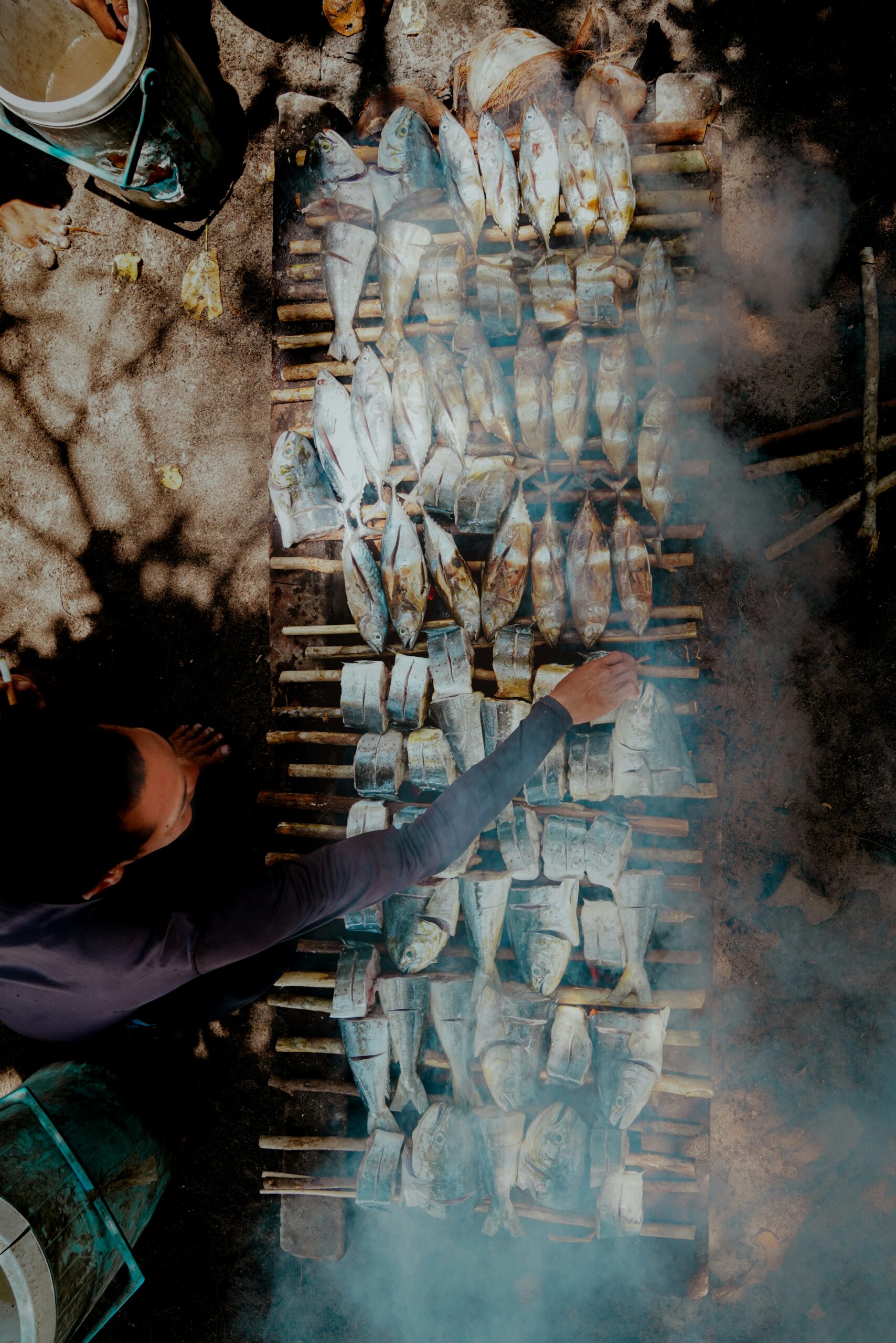
The salmon was wrapped in sweetgrass and birch bark, then placed beside the fire to cook slowly. The result was a flavor that was smoky, rich, and unlike anything I had tasted before. But the real impact came from understanding how deeply this method is connected to sustainability. It preserved moisture, required minimal waste, and honored both the fish and the environment that provided it.
Acadian Flavors and Coastal Ingenuity
Acadian cooking, on the other hand, has its own character shaped by centuries of resourcefulness. Growing up, I spent many afternoons with friends whose families passed down recipes that changed slightly with each generation. Dishes like rappie pie and salted cod fritters were staples during gatherings and celebrations.
What I love about Acadian cuisine is how it adapts to the rhythm of the sea. When catches were smaller, the meals were simpler. When the tides offered abundance, families cooked in large batches and shared what they had. There is a sense of community woven into every dish.
One recipe I make often at home is a simple haddock chowder. The base is just onions, potatoes, milk, and a bit of salt pork, but the flavor comes from the fish, which is always caught locally and in season. My sons, Ari and Kai, love dipping bread into the broth and guessing which fisherman contributed to our meal. It has become a way to connect them to the people behind our food.
Cooking With Intent
Sustainable seafood is not a trend in Atlantic Canada. It is a way of life for many coastal families. As a father and someone committed to ocean conservation, I see cooking as a chance to teach my children about responsibility.
When we go to the market, we look for signs that indicate whether a species is plentiful, recovering, or at risk. We talk about why some fish are better choices than others depending on the season and how climate change is altering traditional patterns. It may sound like heavy conversation for young kids, but they understand more than most people think. Children are naturally curious, and when you connect lessons to something they love, like food, they absorb every detail.
At home, the boys help me clean mussels and sort through herbs. They watch the tide charts with me to understand why certain shellfish are safer to harvest at particular times. Cooking becomes an extension of the ocean literacy I try to teach them through our outdoor adventures.
Bringing Traditions Into Modern Life
What I find most inspiring about both Mi’kmaq and Acadian culinary traditions is how they perfectly balance history and practicality. The techniques are old, but the principles are timeless. Respect the ocean. Take what you need. Avoid waste. Understand the seasons. Stay connected to the environment that sustains you.
In my work with Blue Horizon Technologies, I often rely on advanced tools to monitor marine ecosystems and guide sustainable practices. But when I step into the kitchen, I am reminded that some of the best lessons come from traditions passed down through generations. The recipes may evolve, but the values remain the same.
Cooking has become a way to bring my personal life and professional mission together. It reminds me that protecting the ocean is not only about data or policy. It is also about daily choices. It is about remembering that every seafood meal has a story and a responsibility behind it.
A Shared Table, a Shared Future
When we sit down as a family to eat a meal inspired by the coastline, it becomes more than just dinner. It becomes an opportunity to honor the people who came before us and the ecosystems that continue to support us.
Our table often includes dishes that blend both Mi’kmaq and Acadian influences. A smoked salmon plate served with traditional bannock. Chowder paired with foraged greens. Mussels steamed with herbs we grow at home. Each meal tells a story of culture, ecology, and community.
Cooking this way has taught me that food is one of the most powerful ways to stay connected to the ocean and the people who depend on it. It encourages mindfulness, creativity, and gratitude. It brings generations together in ways that feel natural and meaningful.
As I look ahead, I hope my sons grow up appreciating not only the flavors of our coastal heritage but also the values behind them. If they understand how to cook with care, respect the ocean, and honor its traditions, then I know they will carry forward the lessons that matter most.