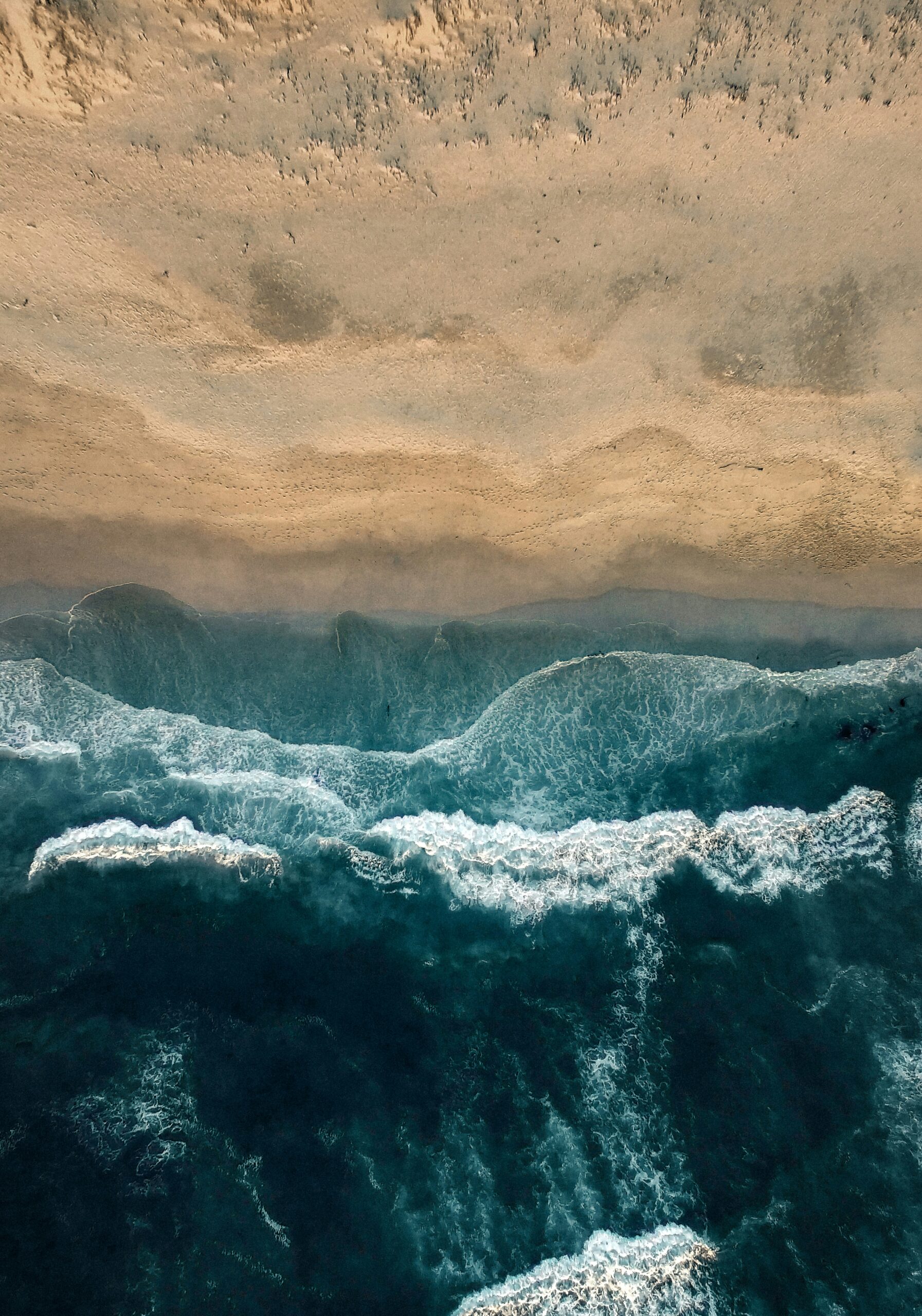
I grew up in a fishing town where the shoreline was never still. Tides rose and fell, storms reshaped beaches, and salt marshes quietly did their work without anyone calling it infrastructure. As a kid, I did not think of those places as systems or defenses. They were just part of life. It took years of engineering training, offshore projects, and climate work to realize something simple. Nature has been solving coastal problems far longer and far better than we give it credit for.
Today, as sea levels rise and storms grow stronger, we face a choice. We can continue to harden our coasts with concrete, steel, and seawalls, or we can work with living systems that adapt, heal, and protect over time. The evidence is becoming clear. Living shorelines are not just environmentally friendly alternatives. In many cases, they are the smartest engineering solutions we have.
The Limits of Concrete Thinking
For decades, coastal protection followed a familiar pattern. Build a wall. Pour concrete. Hold the line. On paper, it makes sense. Hard structures promise certainty and control. In practice, they often create new problems.
Seawalls and bulkheads reflect wave energy instead of absorbing it. That energy scours the seabed, erodes neighboring shorelines, and weakens the very structures meant to protect us. Over time, beaches disappear, habitats collapse, and maintenance costs climb. I have worked on offshore installations where we spent millions reinforcing structures that were fighting the ocean instead of learning from it.
Concrete coasts also fail quietly. They crack, settle, and age in ways that are hard to detect until damage is already done. When they fail during extreme events, they tend to fail simultaneously. Nature rarely works that way.
What a Living Shoreline Really Is
A living shoreline is not about letting nature run wild. It is about thoughtful design that uses natural materials and processes to stabilize coasts. These projects can include salt marshes, mangroves, seagrass beds, oyster reefs, coir logs, and gently sloped beaches. Each element plays a role.
Plants slow down waves and trap sediment. Oyster reefs reduce erosion while improving water quality. Marshes rise gradually as sea levels rise, something no concrete wall can do. Instead of resisting change, living shorelines adapt to it.
One of the biggest misconceptions is that these solutions are fragile. In reality, many living shorelines perform better during storms than hardened ones. After major hurricanes along the US East Coast, areas protected by wetlands often experienced less damage than nearby armored shorelines.
Lessons from Ancient Coasts
This idea is not new. Coastal communities around the world have relied on nature-based defenses for centuries. Indigenous peoples understood how dunes, wetlands, and reefs protected their settlements. In parts of Southeast Asia, mangrove forests were intentionally preserved as storm buffers long before modern climate science existed.
In the North Atlantic, traditional fishing villages respected tidal marshes and barrier islands, not because of environmental ideology, but because experience taught them what worked. Those landscapes absorbed storm energy, provided food, and regenerated after damage. They were resilient by design.
Somewhere along the way, industrial thinking led us to believe that older knowledge was outdated. We replaced living systems with static ones and assumed progress meant control. Now we are relearning lessons our ancestors never forgot.
Real-World Proof from Today’s Coastlines
In the Chesapeake Bay, restored oyster reefs and marshes have reduced shoreline erosion while reviving fisheries and improving water quality. These projects cost less to maintain over time than traditional bulkheads and deliver benefits far beyond protection.
Along the Gulf Coast, communities experimenting with marsh restoration and sediment diversion are seeing promising results. Instead of watching land disappear year after year, some areas are actually rebuilding themselves.
Even in highly developed regions, hybrid approaches are working. In parts of New York and New Jersey, living shorelines combined with strategic hard elements are protecting urban waterfronts while restoring habitat. This is not an all-or-nothing choice. It is about choosing the right tools for the right place.
Measuring Nature with Modern Technology
One reason living shorelines were slow to gain acceptance is that engineers like data. We want numbers, models, and performance metrics. Until recently, it was hard to quantify how well natural systems worked in real time.
That is changing fast.
With modern sensors, drones, and AI-driven analytics, we can now monitor wave attenuation, sediment movement, vegetation health, and ecosystem response at a level of detail that was impossible before. At Blue Horizon Technologies, we deploy real-time monitoring systems that turn living shorelines into measurable infrastructure.
We can see how a marsh responds during a storm. We can track how an oyster reef grows and strengthens over time. We can model future scenarios and adjust designs as conditions change. Nature becomes something we understand and collaborate with, not something we guess at.
This is where innovation meets humility. Technology does not replace nature. It helps us listen to it.
More Than Protection
One of the most overlooked advantages of living shorelines is everything they do beyond erosion control. They create habitat for fish and birds. They filter pollutants. They store carbon. They support local economies through fisheries and tourism.
Concrete does one job, and often does it poorly. Living systems do many jobs at once.
When communities invest in living shorelines, they are not just buying protection. They are investing in healthier coasts, stronger ecosystems, and places people actually want to live near. That matters, especially as coastal populations continue to grow.
Rethinking What We Call Infrastructure
If there is one mindset shift we need, it is this. Infrastructure does not have to be gray, rigid, and lifeless. The most resilient systems on Earth are flexible, diverse, and alive.
Nature is the best engineer we have ever known because it designs for change, not against it. It builds systems that fail gracefully, recover quickly, and improve over time. When we ignore that, we pay the price. When we learn from it, we gain something far more valuable than protection.
The future of our coasts will not be decided by concrete alone. It will be shaped by whether we choose to work with the intelligence already built into the natural world. From where I stand, the choice is not radical at all. It is practical, proven, and long overdue.